

Chimarrao is yerba mate. But not all yerba mate is chimarrao.
Now before we dive any deeper, let’s start by clearing the air that chimarrão and yerba mate come from the exact same plant – ilex paraguariensis. It’s like what coffee grounds are to coffee beans. They’re the same but the difference is in how they’re made and processed.
Chimarrão (also known as erva mate) is native to Brazil, whereas the yerba mate you typically see is usually from Argentina, Paraguay, and Uruguay.
Let’s first start by comparing the most obvious…
How Is Chimarrão Processed?
I’m not going to go into all the fine details here, but yerba mate starts off by the picking of leaves once they’ve reached a certain length.
From there, the plant goes through a process called sapecado where the leaves are quickly dried over a direct flame to prevent oxidation and to preserve its natural properties. Then, it gets dried again but under low heat and for several hours to remove the rest of the moisture. This is usually when smoke is introduced to the leaves. Next, the leaves are coarsely chopped (known as canchada) and aged for typically 1-2 years before finally getting milled into the final product that we all know and love.
 The top is canchada, below are the final products
Now, what about chimarrão?
Chimarrão goes through the same process of harvesting the plant and drying it under direct and indirect flame. The branches and stems are then sieved and separated from the leaves which are milled, pounded, and grounded until it turns into a fine powder – similar to matcha. From there, instead of being aged, the yerba is packed immediately to keep it fresh, giving it its distinct neon green color.

As you can tell, chimarrão consists mostly of powder. This is what you’ll find in most easily accessible brands. However, chimarrão can come in a variety of cuts and different grinds. You can often find terms like moida grossa (coarse grind) and moida fina (fine grind), and even pura folha (pure leaf).
Now, because of this difference in cut between chimarrão and yerba mate, both require different methods of preparation.
But first, let’s go over what you need to drink it…
Equipment For Chimarrao
Compared to other mate-drinking countries, the equipment used for chimarrão is slightly different.
Gourd
In countries like Argentina, their gourds are typically roundly shaped. In Uruguay, you'll find styles like imperials and camioneros.
But in Brazil, chimarrao is traditionally consumed in a cuia. Cuias (which means gourd in Portuguese) are also made of calabash but are created from the other half of the plant, giving these gourds their unique wide-brimmed, curvy silhouette.

Bombilla
In Argentina, bombillas with a slit or coil-like filter are most common.
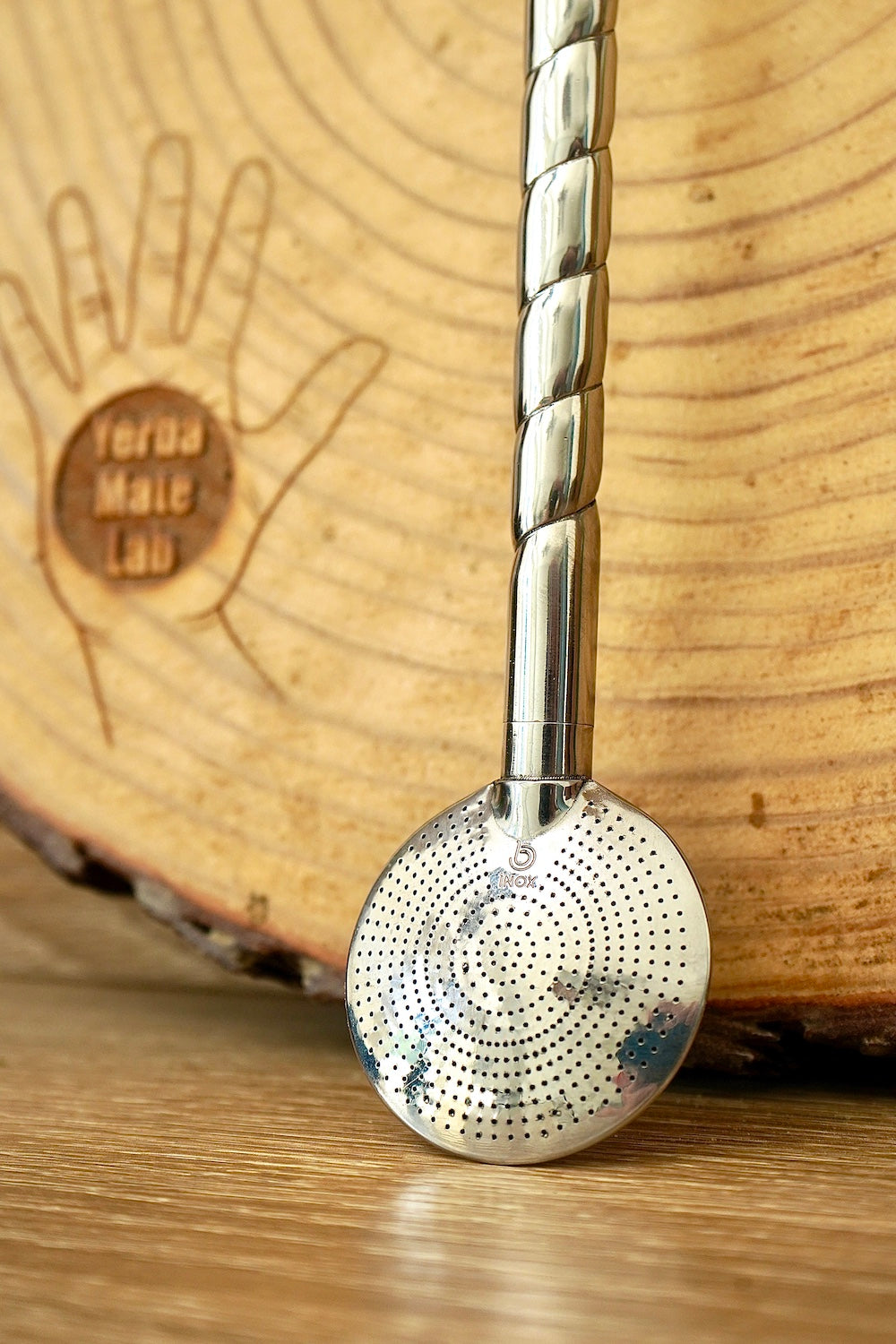
But in Brazil, they use a bomba (which just means straw in Portuguese). These differ as the filter-head is typically spoon-shaped and overall, much larger in size. These provide the best filtration in general. But is especially necessary for chimarrao. Using any other straw will easily get clogged.
To explore these styles, visit our bombillas collection here.

Preparing Chimarrao VS Yerba Mate
Preparing yerba mate from other countries is pretty straightforward and identical. But with chimarrao, more technique is required and will take some practice to get it working every time.
We wrote an entire post on how to prepare chimarrao, but here's a quick breakdown.
There are two methods. The first one is the easiest and has the highest success rate.
- Fill your cuia with hot water until it reaches the neck (the part where it concaves)
- Pour some chimarrão on top until you cover the entire surface and then some
- Use your bombilla and push the chimarrão to one side until you reach the water underneath
- Pour a little more water into the hole you just created
- Covering the opening of the bomba, place it in your cuia and drink
The end result should look something like this:

Now, the second way to prepare chimarrão is exactly the same way you’d prepare yerba mate. All the steps are the exact same.
Watch our video below to see how it’s done.
Now chances are, you won’t get it correct the first time.
Since the particles are so small, it’s almost inevitable that your bombilla will get clogged. And like many mate drinkers out there, you’re going to end up wasting a good amount of mate before you finally get it down pat.
What Does Chimarrao Taste Like?
Chimarrao tastes a lot different from the typical aged yerbas.
Because it’s not aged, chimarrão produces a fresh grassy flavor. It's buttery smooth, mild, creamy, and its flavor profile is a lot more beginner-friendly compared to the smoky, bold flavors of yerba mate.
However, the tradeoff for not being aged is chimarrão lacks complexity in flavor. Brands of chimarrão don’t differ from one another as much as brands of aged yerbas do.
Is Chimarrao Healthier Than Other Yerbas?
Because of the striking difference between the two mates, people tend to think one might be better than the other.
But it’s hard to say…
Remember, chimarrão and yerba mate come from the same plant so they share the exact same properties and phytonutrients. There’s no question about that. What makes answering this question unclear is whether the smoking and aging process of yerba mate negatively affects the plant’s nutrients which I'd assume it does.
But how much, is hard to tell.
But because it’s less processed, more nutrients are likely preserved.
Final Words
Chimarrão and yerba mate both serve their place in the world of mate.
Despite coming from the same plant, the methods used to process each one create a stark difference in appearance, taste, smell, preparation, and duration.
If you’re a beginner though, your best bet is to leave chimarrão on the side for now. Just trying to prepare chimarrão will put you off from the jump. Start slow and play it safe with a classic Argentinian mate, then start working your way up.
If you want an easier to prepare yerba but with a similar taste to chimarrao, you can try our brand La Palma.